
Blog
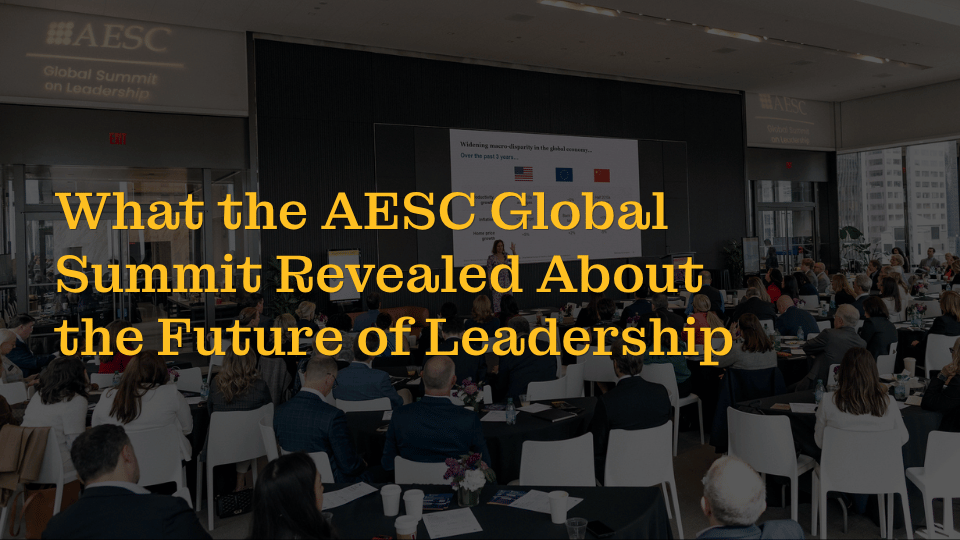
The AESC Global Summit on Leadership in New York City brought together leaders, advisors, and experts to explore the forces reshaping leadership, executive search, and organizational performance.
Across sessions, several major trends emerged, from CEO pressure and AI fluency to brand trust, board readiness, culture, and resilience. Together, they point to a leadership environment that is becoming more complex, more human, and more demanding.
The CEO role is under greater pressure
Sessions on the CEO of 2030 and the shortening life cycle of the modern CEO explored how chief executives face rising pressure from boards, investors, employees, public scrutiny, activism, technology, and geopolitical uncertainty. Leaders are expected to deliver faster, adapt sooner, and maintain trust through disruption.
This has major implications for CEO succession. Boards and search advisors must assess not only whether a leader has succeeded before, but whether they can lead when conditions change.
Judgment is becoming a defining leadership capability
When the strategy changes, prior experience is not always enough. Summit discussions emphasized the importance of assessing how leaders make decisions in ambiguity, how they respond to pressure, and how they navigate moments when there is no clear playbook.
Judgment, adaptability, and resilience are becoming essential indicators of leadership readiness.
AI fluency is now part of leadership readiness
AI was discussed not only as a technology trend, but as a change management and transformation challenge. Leaders need to understand AI well enough to use it, ask better questions, and guide their organizations through adoption.
The practical message was simple: start experimenting. Use AI for research, briefing, preparation, and exploration. Fluency begins with use.
Board and CEO succession require a broader lens
The Summit reinforced that succession does not stop with the CEO. Boards must think about the broader leadership system, culture, and future capabilities the organization will need.
In the session on landing a first board seat, speakers emphasized that directors are selected not only for credentials, but for the value they can bring to the organization’s future.
Culture and engagement are central to leadership success
Leadership transitions succeed or fail based not only on strategy, but on trust, alignment, and cultural fit. Organizations need candid conversations with search partners about what is really happening inside the business, not just what appears in the formal brief.
Brand is becoming more human
The brand panel emphasized trust, emotional resonance, purpose, and memorability. For executive search firms and consultants, this means standing out through clarity, human connection, and a differentiated point of view—not simply repeating category language.
The strongest brands do not just say they are trusted. They make people feel that trust.
Resilience and self-awareness matter
Roy Hibbert’s keynote brought a personal dimension to the Summit’s leadership themes. His story showed that potential must be developed through discipline, ownership, mental resilience, and the willingness to keep improving.
For leaders, that means growth is never finished. Even high achievement requires continued practice.
What These Trends Signal
The top trends from the Summit all point in the same direction: leadership is becoming more adaptive, more transparent, and more deeply human.
For AESC Member firms, the opportunity is to help clients navigate that complexity with insight, rigor, and trusted advice, identifying leaders who can not only succeed today, but evolve for what comes next.
The conversations at AESC Global Summits go beyond trends—they offer practical insight for leaders, boards, and executive search advisors navigating what comes next. Explore upcoming Global Summits and register today to be part of the conversation.
