
Executive Talent Magazine
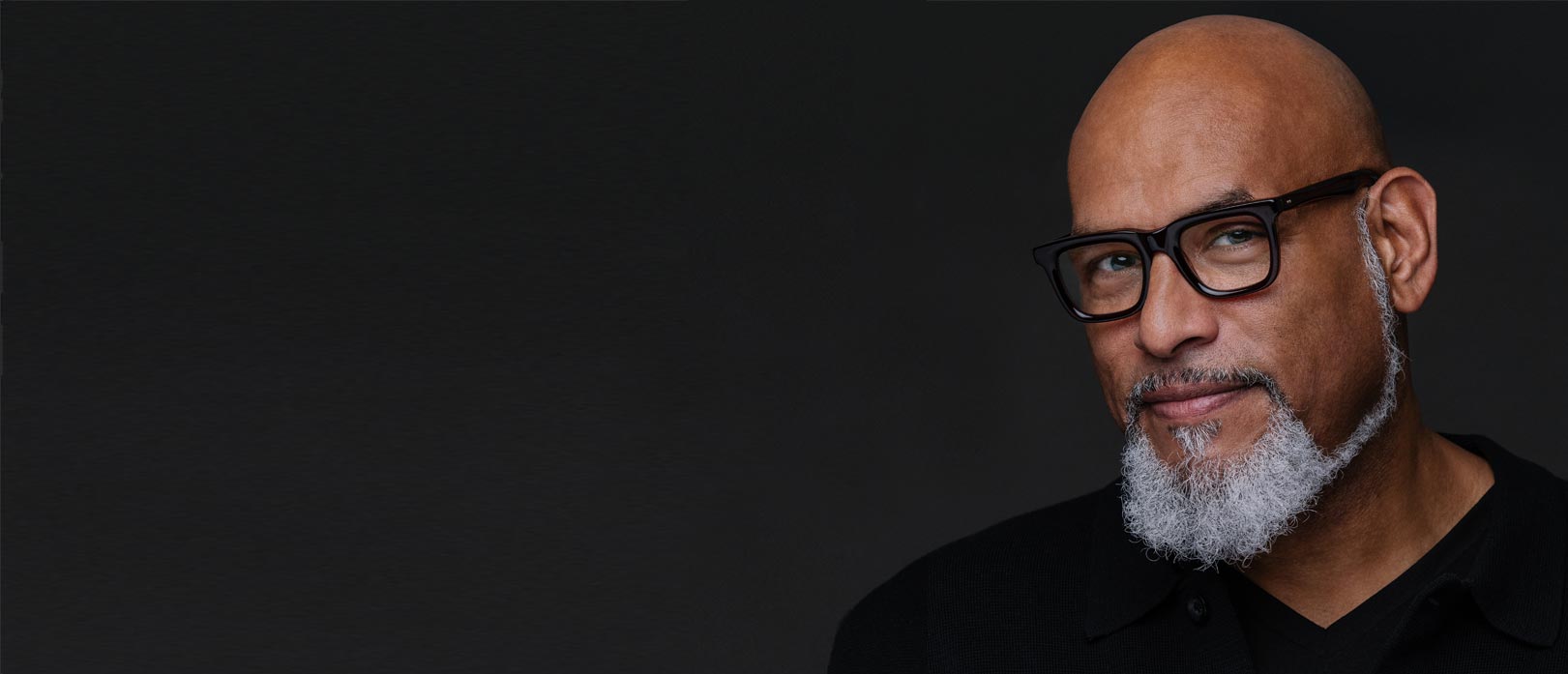
John Amaechi OBE, organizational psychologist, author, and founder of APS Intelligence, is a keynote speaker at AESC’s Global Summit on Leadership in London, November 17–18. His challenge to today’s leaders and leadership advisors is both profound and practical: if anxiety and fear are holding the modern workplace back, only human leadership, truth, and trust can set it free.
The Data Distraction
In the age of analytics, organizations have become intoxicated by the illusion of certainty that data provides. Metrics of every kind promise precision and objectivity. Yet, as Amaechi reminds us, data informs, but only humans can conclude. “Data and analysis are for insights, not for conclusions. Human beings are for conclusions.”
He cautions that the field’s focus on “valid” measures too often mistakes replication for truth. “Creating something that is considered valid is easy; proving that it’s valid requires decades, and most of the metrics that I look at are a picture of leadership of the past. If you’re still saying extroversion is important in leadership, the 1980s called and they want their data back.”
For Amaechi, the problem isn’t data itself, it’s deference. Executive search professionals and leadership advisors, he suggests, must be interpreters, not statisticians, helping clients see beyond the surface.
Diagnosing the Problem
Leadership failures rarely come from poor metrics; they come from misdiagnosis. Organizations often treat visible symptoms like turnover, low morale, or disengagement while ignoring the root causes: misaligned values, dissonant cultures, and broken trust.
At APS Intelligence, Amaechi says, “We think it’s our job to help people differentiate between symptoms and causes. AESC Members will have the same challenge where a client explains ‘we’ve got so much churn happening at the senior level.’ The symptom is people leave too early, and what we’re trying to do is say, you’ve got a rash and a cream that will make this go away for five minutes, but we think you’ve got poison ivy in your house. So let’s get rid of the thing that will always make you itch.”
Amaechi explains that the work is usually more intensive, harder, and inconvenient, “but we have to build a trusted relationship with [clients]. We’re trying to make sure that what we’re tackling is actually going to be the delivery agent for change.”
Looking at Leaders
Descriptions of a leader often include confidence, charisma, ambition, and authority. Leadership looks very different to Amaechi. “People don’t follow or fall in line because of regiment order or fear; leaders aren’t granted permission to lead. People are choosing to follow.”
Successful leadership today demands qualities rooted in self-regulation, care, tenacity, self-assurance, and communication; all qualities that build trust.
Self-Regulation
APS Intelligence found in their research with new workplace entrants that one of the top qualities sought in a manager was self-regulation, or the capacity to face difficulties without letting them negatively affect one’s leadership. Amaechi highlights self-regulation not only as control but also a broader ethical responsibility. As a leader, he says, “The ability of my words to crush and dissemble those around me is greater, and so I must pick my words more carefully.”
Care
Amaechi questions the leadership value of likeability, pointing out that leaders who score highly on trust are not necessarily nice or well-liked. “When you deal with trusted leaders, their decisions appear fair and considered and thoughtful, and when they deal with you as an individual, it feels like they care. Even if it is in just this moment.”
Self-Assurance
Self-assurance is not the same as self-confidence. “Confidence has never had a linear relationship with performance—ever,” Amaechi says. “Self-assurance, on the other hand, is a quality we should be measuring in people.” Self-assurance in leaders is this: “Do you know what you’re great at, can you articulate what you know in a nuanced fashion, and do you know what you need to work on?”
Tenacity
Amaechi distinguishes tenacity from ambition or relentlessness. He states, “Tenacity isn’t the same as craven ambition, and it’s not the same as simply being able to run yourself into the ground, because burnout is not a predictor of high performance in an organization.”
He uses examples from his experience as a professor: “I have had students who come to my evening seminars in a Serco uniform… juggling a family… working their way through a PhD by cleaning offices at night.”
Communication
Amaechi powerfully underscores the impact of leadership communication. “We have a definition of eloquence as the ability to transfer your thoughts and your intentions from your mind to the mind of somebody else with the least chance of misinterpretation. Think about that as an effectiveness strategy within organizations.”
He also emphasizes the heavy cost of under-communication: “When you under-communicate, people think you care less and you’re less good at your job. And so guess what happens when people think you care less and that you’re less good at your job? Trust plummets. It’s all connected.”
The Danger of Dissonance
The employer brands that companies create signal to candidates and customers alike who they are. Talent expects these commitments to be a part of the culture and reinforced by leaders.
- We’re a family: “The kind of person who leads should be a person who recognizes that the symbolism of that word ‘family’ is that relationships matter, and they matter as much or more than competence, because that’s the implication of that language.”
- We’re proud of the experience that all of our colleagues have: “This should be an organization where anybody can speak up. What kind of person should inhabit the top role in an organization that says that?”
- Your manager will take an interest in your career: “About 60% of FTSE companies have some language like that on their careers page. What sort of leader should be at the helm of a company that makes that promise?”
The consequences of a conflict between the claims and the experience are considerable. “The gaps between what is promised and what’s delivered, the gaps between what people say the environment is like and what is actually experienced — pain lives in these places. Churn lives in these places. Productivity loss lives in these places.”
The toll of this dissonance, Amaechi notes, is immense. “Psychological distress, anxiety, and fear are not performance-enhancing drugs. These decimate performance.” The solution? “You can stop using that language, or you can hire somebody who meets it.”
The Fear Factor
Fear and anxiety are widespread in today’s workplaces. Amaechi stresses that fear activates the amygdala, resulting in diminished cognitive function. “You can literally make someone dumber by making them scared at work.”
Fear clouds judgment, constrains innovation, and corrodes relationships. Whether it’s a mid-manager’s insecurity or a board director’s fear of obsolescence, anxiety is a tax on performance. As consultants, Amaechi insists, “it is our responsibility to help clients replace fear with trust.”
“To me, trust has always been fundamental… If you get these things right, transparency, agency, psychological safety, good communication, you’re going to be in great shape.”
Superficial trust is not enough; real trust is tested in significant moments: “Being told yes to everything is a path to superficial trust, not enduring and resilient trust. When something truly significant happens, whom do you turn to?”
Amaechi insists you can’t eliminate fear by seeking comfort. “You eliminate fear by telling the truth.”
The Anatomy of Trust
If fear narrows the mind, trust widens the field of possibility. Trust, Amaec
hi argues, is the central nervous system of high performance. It’s built through the “Fab Five” model he uses with clients: trust, transparency, agency, communication, and psychological safety.
- Agency: Enabling people to have control and ownership over their work, boosting engagement and responsibility.
- Transparency: Open sharing of information and decision-making rationale to foster alignment and reduce confusion.
- Communication: Frequent, authentic interactions that build relationships and trust beyond mere transactions.
- Trust: Developed through consistent fairness, care, and reliability, creating a foundation for psychological safety.
- Psychological Safety: Creating an environment where people feel safe to speak up, take risks, and learn without fear of negative consequences.

Trust, Amaechi argues, is not granted based on seniority or prior roles but earned through consistent fairness, care, and transparent communication. True trust, both between leaders and teams and between consultants and clients, is about consistent honesty.
Conclusion: Truth, Trust, and the Courage to Lead
Amaechi is unsparing in his critique of hollow rhetoric. He notes, with sharp humor, “So many are interested in marginal gains because they’ve watched a cycling documentary. But they don’t seem to realize that what is not marginal is the impact of more competent leaders. More competent, interpersonally skilled, self-regulatory human beings are better for workplaces. And if you focus on that, you will deliver dividends, literal dividends in the end.”
Leaders and consultants alike must embrace a new imperative: build organizations that reward openness. Create cultures where truth—even uncomfortable truth—becomes a shared act of trust.
Trust is the foundation of performance. Trust grows in the light of truth. The consultant’s highest calling, Amaechi argues, is to be a trusted truth-teller.
